Wednesday, 8 June 2022
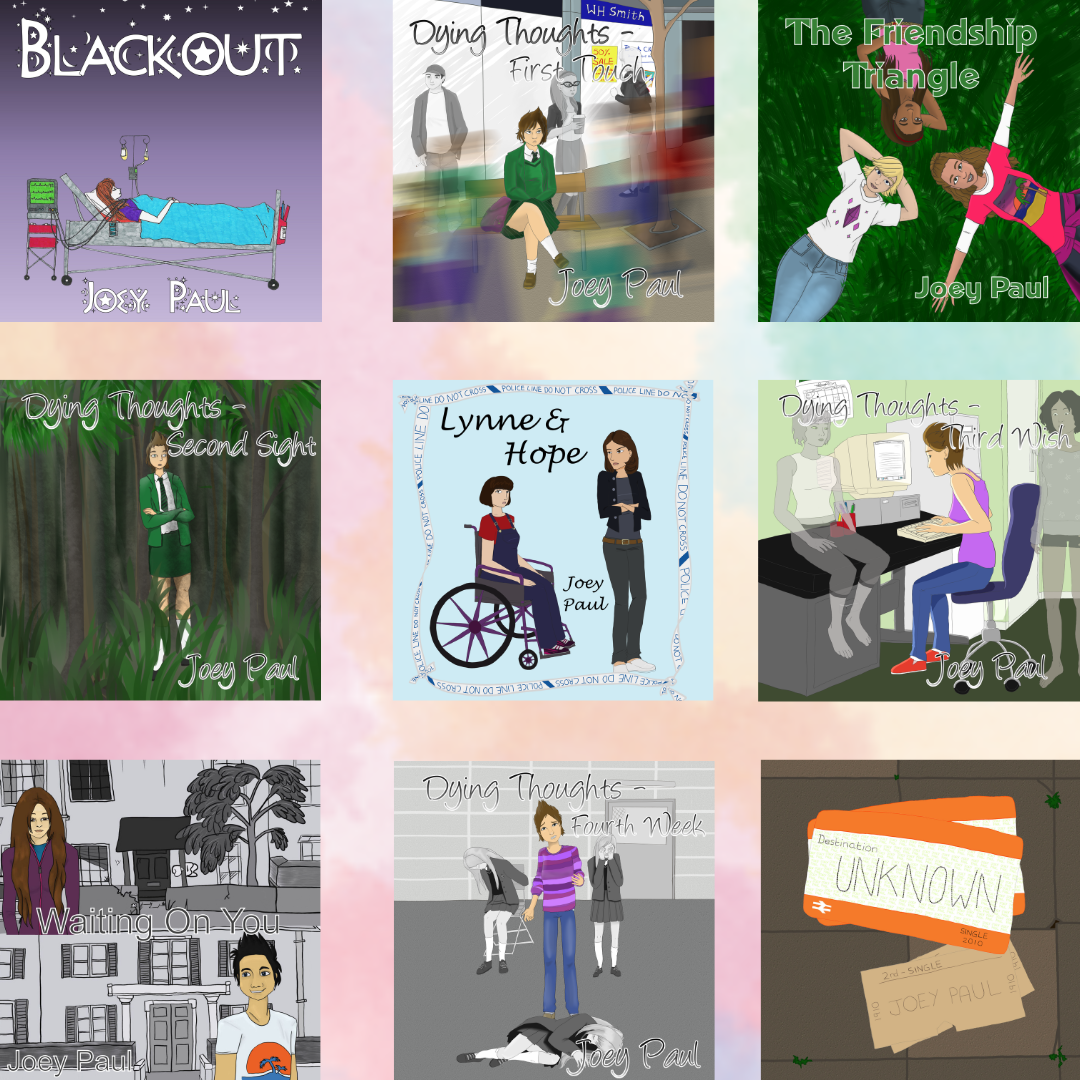
Audiobook Announcement!

Monday, 10 August 2020
15 Years As An Author - The Creative Process
I know I've done a video on this, which can be found here, but since the 10th falls on a Monday this year, it made sense to do a blog post as well. For those who don't know, on August 10th 2005, my début novel was released into the world for the first time! That makes it 15 years since I officially became an author. I've celebrated this day every year since that first authorversry but this one seems extra special because 15 years is a long time!
I could do the same as my video and talk about what I've done over that time, but I don't wanna be repeating myself so instead I'm gonna take you back 15 years and talk about that release day. Things were different then, the world wasn't in lockdown, and I lived in a one bedroom flat with B and a very young Miss D who'd been born the previous October. I had my release day party in B's three bedroom flat, because I had a bunch of friends who came over to celebrated with me. It was a three day party and while I've never done a lauch party since, it is a very good memory, even though a lot of the people present are no longer in my friend circles.
So imagine this, I was a younger Joey, 23 years old, and finally getting to have my first book out on shelves and on Amazon. I had longer hair, and wasn't in a wheelchair to the extent that I am now. My lungs were a lot more stable, so not on oxygen. I hadn't even thought of things like Authortube or the like. I was a baby author and there weren't things like ebooks, so Blackout was only in paperback.
And while it's been re-editied and relaunched since then, I still do have one of those first paperbacks and it's signed by everyone who was there that day and it's a nice thing to have. Fast forward to 2011, and I was releasing Blackout on KDP and taking the indie author title in my hands and calling it mine. I also released my second book, and from there planned to release one book a year.
And I haven't really looked back since, I've released almost eighteen books, which my eighteenth coming out on October 13th! I have them all in paperback and ebook and am wide across all platforms. On top of that, I've had new covers for the earlier books and am now making sure I have a good cover before it's ever seen by people. I've gotten an author platform, started this blog, and have been posting and writing, and my whole routine has changed when it comes to both releases and writing.
When I wrote Blackout, I'd had the idea for so long that it just poured out of me. Writing my third book, I was realising that it was going to take me longer and longer to finish them because I hadn't been holding that idea in my head for a good six years before I put pen to paper. I have switched from handwriting to typing full time. I have drafted over thirty books, and am about half way through two others. I have my routine that works well for me. I draft two books, revise another and am usually in editing stages with another, depending on the time of year.
Overall, this has been an amazing ride to be on, and I can't wait to see what the next five, ten, fifteen years mean for me as an author. I love that this is my job, love that I get to create worlds and characters and all of that. And I love that my readers have been here along for the ride. Long may it continue!
Friday, 24 July 2020
Guest Blog: What Indie Authors Should Know About Book Design - Desiree Villena
What Indie Authors Need to Know About Book Design
As an indie author, you’ll know you’re not just a writer. You’ve got to handle all sides of designing, producing, and marketing your book yourself — which is why you need to understand the basics of exterior and interior book design.
In an ideal world, readers wouldn’t care about what’s on the cover of your book, or how your text is formatted; they’d concentrate exclusively on the prose. But book appearance does matter because it can act as a magnet for new readers. That’s not to say that a beautiful book without substance would succeed on the basis of appearance alone. Still, if you’ve written a great book and paid little attention to the design, you may be doing yourself a disservice.
As manager of your own author brand, there are two sides to book design you need to be aware of. We’ll start with the first thing readers will see: your book cover design.
Book Cover Design
Your cover is super important! It doesn’t just make your book aesthetically pleasing — it contains a lot of implicit but crucial information about what kind of story a reader can expect.
Ideally, you want your cover to clearly communicate your genre. This can be done through typography (like a serif/sans serif font or hand-drawn lettering by a professional), the cover art itself, and the “copy” on the cover — in other words, the promotional blurbs.
To test the effectiveness of your cover, you can show it to acquaintances who don’t know what the book is about and ask them to take an honest guess about the genre and story. They don’t have to pick up on every single detail. But if you’ve written a romance novel and they think it’s a crime thriller, you’ll know you need to make some serious cover adjustments.
The best place to start brainstorming about cover design is, of course, the Internet. Look up authors writing in your genre and take some notes about the appearance of their covers — you’re trying to appeal to the same audience, so you can take inspiration from how another professional has attracted readers. Depending on whether you’re planning to sell print copies of your book or ebooks only, you’ll also need to look into the different dimensions demanded by your chosen format.
No matter which decisions you make, remember to aim for a balance between a sparse and a hectically busy cover. Not every bit of blank space has to be filled. Similarly, unless you’re going for a purposefully minimalist look, your cover should include something beyond the title and your name.
I know, design concerns are a lot to take in. If you can afford to, the best thing you can do is consult or hire a professional designer, who will ensure that your book looks professional enough to compete with well-established authors. (They’ll also take charge of various important practical matters, e.g. the cover’s file format and resolution, as well as color requirements for printing).
Finally, remember that the exterior of your book isn’t just the front cover: you’ll have to factor in the spine and back of the book as well. The back cover is an excellent place to curate reviews along with a quick synopsis. This shouldn’t give too much away, and its tone should reflect that of your story. You’re a writer, so use your craft to make this copy pitch-perfect!
Interior Design
Of course, it’s not all about the cover. Book design, when done well, should maintain a consistent level of professionalism on both the outside and the inside of your book.
Make sure nothing distracts your reader from the words on the page. Unlike on the cover, the focus with your interior designer falls on the text itself. You don’t want your audience to be squinting at a loopy Monotype Corsiva font, or wondering why there’s so much empty space between words.
To achieve that, you’ll want a clean font and a professional-level typesetting software (something better than Microsoft Word) to ensure that your font, spacing, margins and pagination are all flawlessly in place. A professional typesetter can also help with this, but for most authors, research and a solid piece of DIY software will suffice — and if you only have the budget for a pro cover designer or a pro interior designer, you should choose the former.
There’s nothing more satisfying than holding a flawlessly designed book and knowing that your hard work paid off. Now that you understand book design a little better, your project will open up to so many new possibilities! Assuming you’re finished editing the prose, your next focus in the process of publishing your book should be marketing it to the best of your abilities. Do that, and you’ll be on your way to becoming a successful author in no time!
Join Joey here on the blog on Fridays for interviews, reviews and guest bloggers. If you'd be interested in doing any of those, you can contact Joey here.
Monday, 13 April 2020
The Trials Of An Indie Author: That Feeling Before Release
THE TRIALS OF AN INDIE AUTHOR: THAT FEELING BEFORE RELEASE
I thought that since Lights On is being released next month, I would talk about not just what goes into being an indie author before release, but also the feelings and anxiety that goes along with it. I feel like it's not talked about as much as it should be. We talk about the highs, but we don't too often talk about the lows, and while I don't want to do a piece that talks completely about those lows, I feel like it's worth talking about.
So, for people who are new to my blog, or me, I have published sixteen books now, and Lights On will be number seventeen. I am solely an indie author and usually do two releases a year. I'm not a big fish, but I'm getting there, and I write young adult fiction through a variety of genres. So with that out of the way, let's talk about those highs and lows!
HIGH #1 ARC REVIEWS
The one thing that I really look forward to is getting ARC reviews back. I love checking to see if they've arrived and reading through them. Now I know not every author reads their reviews, but I do. I love seeing what a reader liked, and didn't like. I don't ever comment on reviews, but I adore getting to see them pop up. So in the run up to release, once the ARCs have gone out, I do love the anticipation of waiting for those reviews to come back. And so this is a definite high for me!
LOW #1 STRESS LEVELS
This might seem a big changed from the first high, but along with all the work that goes into a release, there's always a certain level of stress that goes along with it. The worry that people won't be done in time, like the cover design, the edits, the proof-read etc. You want to make sure that everything goes off without a hitch and from time to time, you do end up getting big issues along the way. Mostly this time around, things have been less stressful, but that doesn't change the anxiety that goes along with a release. It's a huge thing to release a book, and there's always gonna be that low-to-high level stress threaded through everything.
HIGH #2 HYPE BUILD UP
Now as I said above, I am still very much a small fish. I don't get the same amount of hype as some authors, but I do get some, and that build up, of readers either pre-ordering or getting ready for release can be a huge mood lift. It can keep you going and get you just as excited to hit that release day as everyone else. I personally do a seven day countdown when it comes to release day. I love getting to post that every day and I love the response I get to it. It's a great mood boost!
LOW #2 BURNOUT & FATIGUE
I don't know if this is just me, I'm pretty sure it's not because I've seen other authors talk about the burnout and fatigue that go along with a release. The fact of the matter is, you're pushing yourself for months before it, and then months afterwards. The promo and all the rest don't end when the book is out. You'll still be trying to market, still be keeping that hype build, and for me at least, still working on other projects. It's a quick way to end up barrelling towards burnout.
Now because I do two releases a year, I used to have them back to back. That was hell. I've since learned from my mistakes and release one in May and the other in October, giving me, and my editors and such, some breathing room. I have been done with all edits for Lights On since the end of March and am now in the thick of the developmental edits for my next release. Once I finish those, I'll have a month or two off before I start the next edit for the next release. And during that time, I gotta write other projects, so you can see where I'm going right? I am working hard, and because of that, the burnout has to be dealt with in small doses to try and not completely lose in during a developmental edit. It's an uphill battle, but one that I'm happy to be on.
HIGH #3 THE FEELING OF ACCOMPLISHMENT
I know this seems vague but I didn't want to end on a sour note. I don't know about other authors, but for me getting that book out, seeing it in the wild and seeing other people enjoy it, gives my mood a lift like nothing else. I've been published for almost fifteen years and I've never managed to lose the joy that comes from having my book out there in other people's hands.
At the end of the day, there are many highs and many lows that I've not mentioned here. Releasing a book is hard work, writing a book is hard work and all the steps in between are, you guessed it, hard work. There are a lot of behind the scenes stuff that goes along with being published and the work doesn't really ever end. Every author goes about it differently and everyone has a myriad of emotions when it comes to release day. Personally, I'm looking forward to people finally getting the second book in the Lights Out trilogy, just because the first was so well received, and I know a lot of my readers feel the same way, which is amazing to think about.
What are some of the highs and lows for you when it comes to releasing? Lemme know down in the comments!
To pre-order Lights On, you can go here, and don't forget to grab the SWAG that goes along with it here.
Follow Joey here on her blog, or on Facebook or Tumblr to be kept up to date with the latest news regarding Joey and her books
Monday, 18 November 2019
Writing Sprints - The Creative Process
WRITING SPRINTS
I feel like I've been living under a rock because for a long time, while I knew about writing sprints, I didn't really think they did much. I'd never tried them and kinda saw them more as another solitary part of writing that didn't appeal to me. And then, while on a deadline and needing to finish the chapter I was on, I hopped on youtube and joined a livestream chat where sprints were going on.
And boom! My mind was opened to the whole thing, and it allowed me to get a bunch of words written, finish the chapter and still have some time spare. And it just opened my eyes to the whole process. I didn't partake in the chat, but it was there if I wanted it. On top of that, having a whole group of other people trying to do the same thing I was, was empowering in a way I hadn't realised before.
So what are writing sprints and where do you find them? The first is an easy answer, writing sprints are basically when a group of writers get together and set a timer with the plan to write as many words as they can in that time. It's a fun activity and can help you connect with writing buddies, find a writing family and are especially useful during NaNoWriMo and other times when you want that personal connection, but also need to get some words written.
Where do you find them? ALL over the internet! From Twitter to YouTube and beyond. I'm sure there are loads on Discord too, though it's not a platform that I've been able to use to any success because it slows my computer down. However, when you find some good ones, you'll usually discover that there's a schedule as to when they're posted and how often. You'll get the occasional people who livestream often, and then those who only do it for special occasions, but however you find your writing buddies sprints are a super helpful resource.
Here are some of the reasons I can think of as to why they are helpful!
#1 - WRITING IS USUALLY LONELY
Generally speaking, most people who write do so alone. There's always exceptions to that rule, but I'm thinking mostly of myself and the writers that I know. We might have a loved one with us if we're writing in bed or at home, but the act of writing is done in solitude. Sprints and livestreams make you connect with people who have a common goal. The internet has made it so easy for people to bridge the gaps over the miles between them and make good friends who they can then write with online. This is a HUGE positive!
#2 - COMPETING WITH YOURSELF HELPS PRODUCTIVITY
It's not just the thought of beating yourself in the writing sprint, but having people around you to celebrate when you do. Yes, you can compete against the others in the sprint, but so long as it's a nice and friendly one, there shouldn't be a problem. Overall, being around people who are excited and happy about your project will make you want to write more, and not doing it alone, will add to that.
#3 - CHATTING IT THROUGH CAN HELP WORK OUT PLOT HOLES
Let's face it, there will be times when you can't think of what happens next, or how to deal with a plot hole, and having other writers, who completely get that, is going to help you move forward. I'm not someone who really suffers from writer's block any more. I used to be, and I did a piece about that here, though I plan to update that in the new year, but my point is, that having people to talk things through with both adds to the enjoyment and gives you a chance to talk it through and work from there.
And finally, #4 - FRIENDS ARE ALWAYS A BONUS!
This is a big one. For a long time I just didn't have writing friends who I could actually chat with. I knew people who were authors and I would sometimes speak to them on Facebook in comments and such, but I didn't have a writing group, my people who I could go to and talk about anything with. I tried on Twitter, but I kept doing it wrong, and I tried elsewhere and just ended up a bit of a loner when it came to writing.
Enter Authortube (channel here) and even then I didn't really manage to make any friends there. I was more active on Twitter and I made a few friends there, and then they joined Authortube and from there it all blossomed. On top of that, I did signings which made me friends there as well. All in all, having friends in the writing community are only a good thing. Having people you can talk to about either writing or anything else, is great, especially when they're coming from a similar position or even if they're not. Variety is a good thing!
So there we have it, my awakening towards writing sprints and all you can learn from them. Try and give them ago during NaNoWriMo and of course, may the writing go easy!
Follow Joey here on her blog, or on Facebook or Tumblr to be kept up to date with the latest news regarding Joey and her books
Monday, 23 July 2018
Revisiting Neil: Is My Gremlin Locked? - The Creative Process
REVISITING NEIL: IS MY GREMLIN LOCKED?
A while ago, I talked about my writing gremlin. I named him Neil and talked about the steps I'd taken to quiet his voice. You can find those pieces here and here. However, it been a few years and things have changed and so I thought I would talk about how Neil still has an effect on me, even after all this time as a writer. In all honesty, I don't think there will come a time when I *don't* feel Neil's presence. I have more experience than I did a year ago or more, but I do have an anxiety disorder and I know I have problems with self-esteem and all of that.
So how do I move forward? How do I make it work for me, knowing that I am probably always going to hear those whispers of both imposter syndrome and also not feeling like I am enough writing wise? Some of it is trial and error, some of it comes from being able to implement the tools my therapist has given me and some of it is also gaining confidence in my own ability and work. All of that together can lead to being able to quiet that voice to a hushed whisper and ignore it on days when it hits me hard. So how do I manage that? I'm going to give you some of my tips, while also asking you to bear in mind a few things. I am not a trained psychologist or doctor. I am also only able to give you tips that work for me. They might not for you and that's okay. You just need to find the tools that will.
#1 - A SUPPORT NETWORK
The one big thing you need as an author, a writer, well anyone really, but in this instance writing, is a support network. Whether that's people online or in your life, you need people that you can go to with your worries and know that they will hear you out and help you deal with things. I can't tell you how many times I've gone to B or Kim, who are both in contact with me daily, and had a worry shared and them talk it through with me. I know that I am very lucky to have that and it's not always easy for people to find their people as it were, but these can come in the shape of critique partners or betas, fellow authors and readers. It doesn't have to be all offline people, you make the friends where you do and family can, sometimes, also be a good support network.
#2- KEEP IT REAL
While there is a lot to be said in presenting a confident front, and I agree with that to a point, people, as in readers and others, will want to know that the person they see is the same person writing the book. What I mean by this is, it's okay to have moments where you struggle. While it's probably not best to rant about it on your twitter or blog talking about how you suck and should never write all the time, it's okay to have blips. Everyone has them and that just makes you human. To continue on this note, it's okay to not need to do that. I personally don't take the down moments and put them on my social media. Simply because I have a great support network and it doesn't need to happen. However, I completely get that for some people their support network is on those sites, so I'm not going to pretend that you shouldn't allow yourself that support however it comes.
#3 - REMEMBER YOU'RE NOT ALONE
I know this plays somewhat into the support network and all of that, but a big thing for me is remembering that I'm not the only person, creative or otherwise, to feel this way. Confidence is something some people have and others don't. I wish it was as simple as just writing something and being amazed by it, but then again I look back and realise just how far I've come, which I'll cover in another point. Remembering that you're not alone helps me, it reminds me that everyone struggles and that it's okay to do so. Sometimes you need to reach out for help, and that's okay.
#4 - LOOK HOW FAR YOU'VE COME
This is a big one for me as well. I look back at the first draft of a book and then remember as I went through each stage of revisions. With every new draft, that book has transformed from the idea to the finished product. And it's okay to remember that while I loved Blackout when it was done, I have grown as a writer, I will continue to grow as a writer. I keep writing and I'm always going to keep growing and that's so important for someone to realise. Where you start with a first draft is often miles apart from where you finish. It's a great boost to be able to look at the end product and remember that the project you're working on now will one day get to that stage and will be so much better for it.
#5 - ASKING FOR HELP IS OKAY
It's okay to need more than just friends and tips from a blog. It's okay to need medication and therapy. There is nothing wrong with any of those, and if you need help, it's okay to ask for it. Like I said, I've got medication, I've got a therapist, and if you need that, then you need it. I can't advocate enough for getting the help you need to be the best person you can be. There's no shame in it, at least in my eyes.
So those are my five tips on dealing with gremlins. I wish it were as simple as locking them in a cage and throwing away the key, but mental health and the things that go along with that sometimes need more. They also don't generally just go away. It's a lifelong thing and everybody has some level of anxiety. It's when it becomes something you can't move past that you need to realise that getting help for it doesn't make you a bad person.
Follow Joey here on her blog, or on Facebook or Tumblr to be kept up to date with the latest news regarding Joey and her books.
Sunday, 8 July 2018
#AmWriting - #002 [CC]
BUY WALK A MILE: http://www.books2read.com/WAM
THE BOOK ROBIN HOODS: https://therobinhoods.wixsite.com/thebookrobinhoods
TICKETS FOR #BLISS2018: http://bit.ly/2yGorwr
TICKETS FOR #DARKERSIDEOFFICTION2018: http://bit.ly/2IVeJXK
BUY MY BOOKS ON AMAZON: http://amzn.to/1VhLHog
BLOG: http://www.joeypaulonline.com/
TUMBLR: http://authorjoeypaul.tumblr.com
FACEBOOK: http://facebook.com/JoeyPaulOnline
TWITTER: http://twitter.com/MsJoeyBug
INSTAGRAM: http://instagram.com/authorjoeypaul
GOODREADS: http://bit.ly/1UcS61E
Monday, 25 June 2018
Spoonie Writer: Taking Care Of You
SPOONIE WRITER: TAKING CARE OF YOU
I've been a spoonie for the majority of my life. I've been a writer since I was 19 and published almost 13 years now. One thing I have been very clear on is that you gotta take care of yourself. I've talked about this in other writing pieces, in vlogs, and all over the internet, but sometimes it's good to have a reminder of why you need to make sure you're taking care of you as well as your writing.
Now it's been a while since I did a piece like this, so I'm gonna quickly recap what a spoonie is: A spoonie is someone who is chronically ill and identifies with The Spoon Theory. How am I a spoonie? Well I have several chronic conditions including Fibromyalgia, M.E. and a rare form of asthma that leaves me reliant on oxygen and in a wheelchair. Now that parts over, lets move onto the main focus of this piece. Taking care of you.
In the writing world there is a lot of pressure to be working constantly. I see it, hell I even do it from time to time. There's also a big feeling that you should be pushing yourself to your limits to both write and build your platform. I am still considered a very small fish in the writing world and I doubt I will ever become a big one. Not because I don't want to be, but because there are certain things holding me back. Namely my health, or lack of it. I work hard, I write mostly every day and I make sure to stay on top of my own deadlines and everything that comes along with writing, but yet I still struggle sometimes.
A good example of this is last month I finished two books earlier than planned. I had pretty much a whole week to do nothing but various other pieces of admin. I could've started my next two projects and spent some of that time planning them, but I didn't, because I knew I'd been pushing hard and I needed to take a break. Now this applies whether you're a spoonie with physical conditions or mental health problems. I'm both and sometimes it's harder to take the time for myself when my anxiety of depression are acting up because there's a lot of stigma that surround them. People see the oxygen tubing and they give me a break for that, but when it comes to needing time because my depression is flaring and my anxiety is through the roof, it's harder. But that doesn't mean it shouldn't happen.
I know that there's a lot of talk about how people should be pushing past their barriers to make sure they achieve the maximum they can in any given time, and that's just not true. There are valid reasons for taking a break. Even if no one outside your own brain is saying that to you, it's still wrong. I struggle with taking time for myself. I don't want to let people down and I don't want to be the one who's always the reason for disappointment, but at some times, I do need to say no. I do need to tell people I need this time for me. It's not easy, not in the slightest and while yes, the majority of people should be understanding, there are some who won't be.
Here's the thing, writing is a creative pursuit. You're using all your imagination and time, and energy and all of that to create worlds from nothing. That has a toll on you. There should always be a chance for you to take some time for yourself, and if the people around you are saying different, then they need to take a step back. Again, it's not easy, I get that. I have friends who don't get that I need time for myself and I get how hard it is to say no to them, knowing that you're causing them upset and discomfort, but you need to take care of you. You are valid and no is a complete sentence.
So my advice is to take that time, take it slow and remember that you matter. You are important and alongside that, so are your needs. Now I'm gonna go and curl up with a book and have some much needed down time.
Follow Joey here on her blog, or on Facebook or Tumblr to be kept up to date with the latest news regarding Joey and her books.